An instrument is finished
when it begins to sing.
A Kono passes through many hands and many decisions before it is considered complete. Each contributes to a single quality: sound.
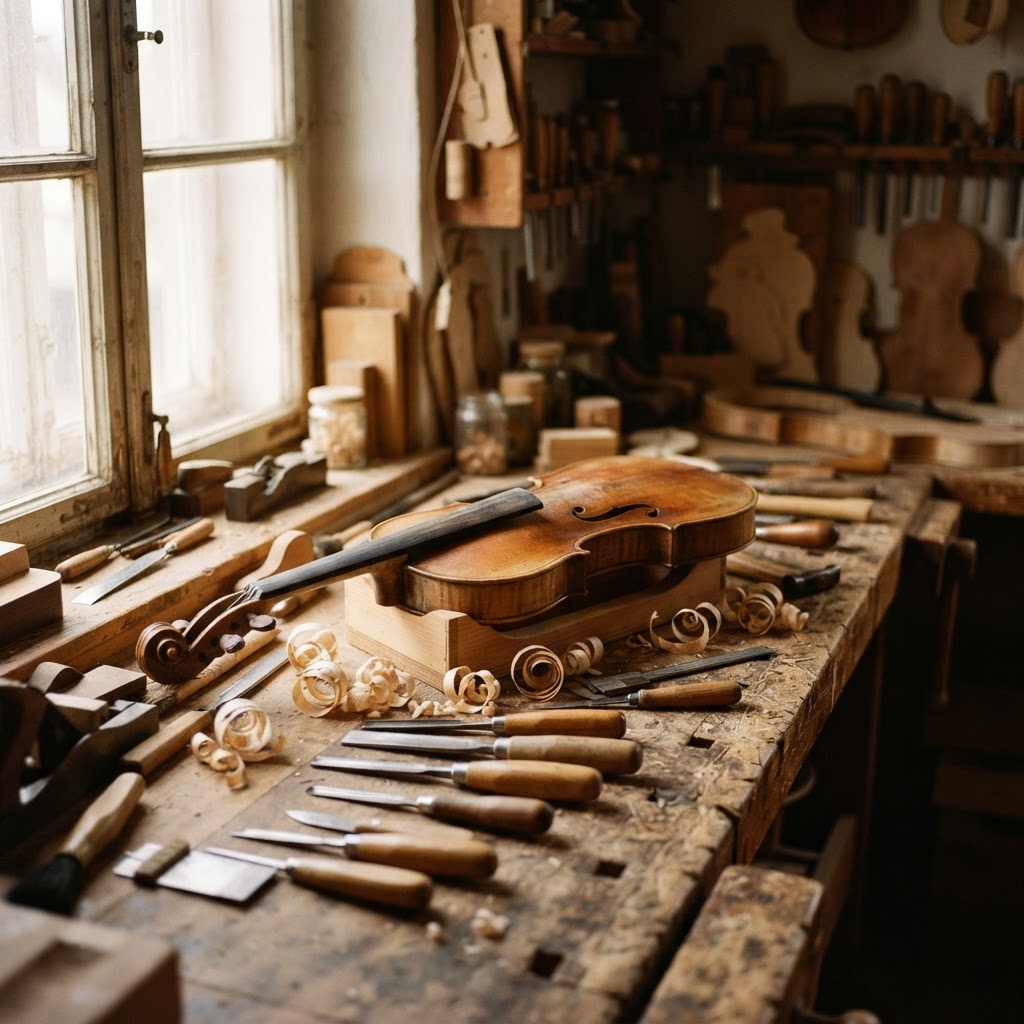
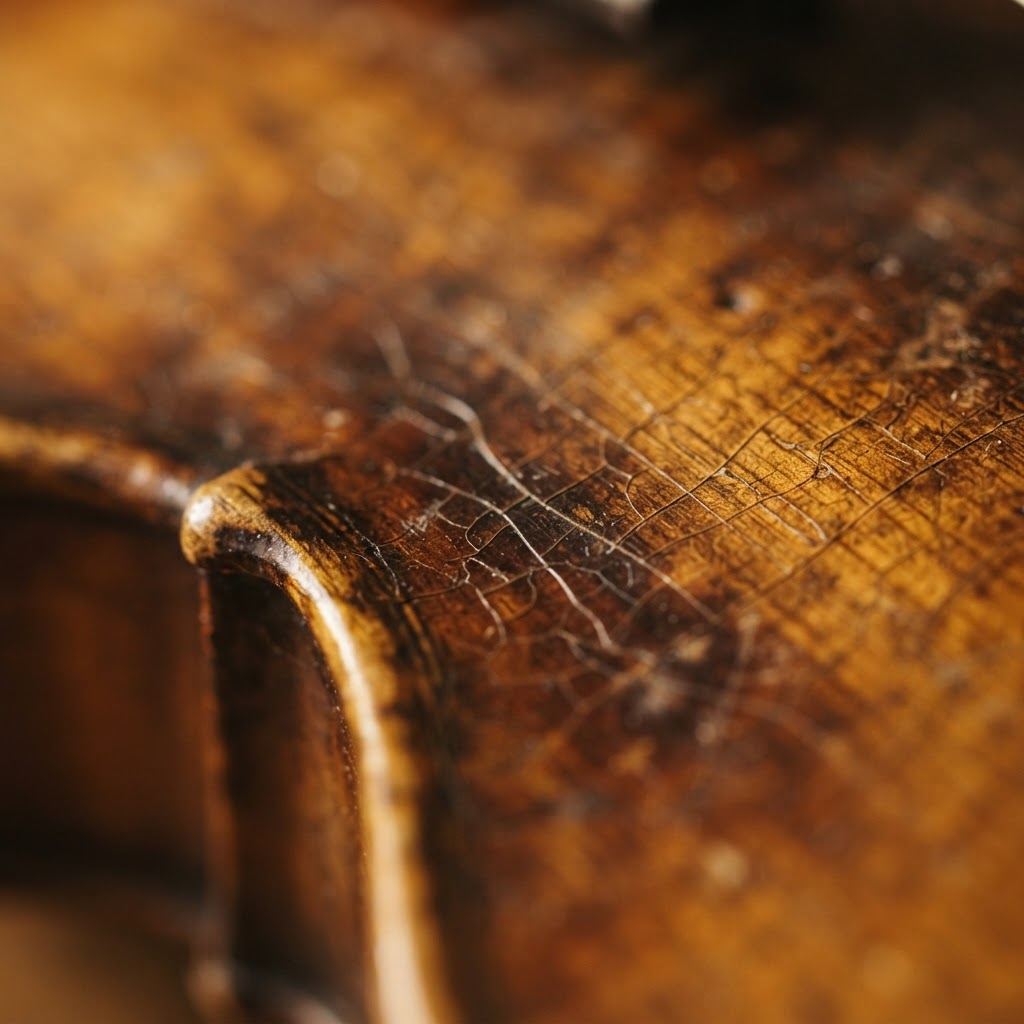
From raw wood to responsive voice.
Japanese Construction
Each instrument begins in the Hiroshi Kono workshop in Tokyo, where the body is built following the proportions of the classical Cremonese tradition.
Tonewood
Spruce for the top and figured maple for the back and ribs are selected for their acoustic character — the raw voice of the instrument before a single note is played.
Graduation & Resonance
The thickness of the plates is refined to balance strength and flexibility, shaping how freely the instrument resonates across its range.
Varnish
A distinctive antiqued varnish is applied in careful layers, giving each Kono its warm depth of color and its quiet, aged character.
Professional Setup
Preparation and setup receive close attention — the stage at which an instrument is truly readied to respond in the hands of a player.
Bridge
The bridge is fitted and shaped to the individual instrument, transmitting the strings’ energy into the body with clarity and efficiency.
Soundpost
The soundpost is positioned to bring the instrument into balance — a small adjustment with a profound effect on tone and response.
Strings & Player Evaluation
Finally, each Kono is strung, played and evaluated as a musical instrument — judged by how it responds, not merely how it appears.
Kono combines Japanese craftsmanship with the tonal expertise and tradition of The Violin House of Weaver. Specific workshop and finishing processes may vary by instrument.
Hear what the craft makes possible.
The measure of every decision is the moment a musician draws the bow. Explore the voice these instruments were built to produce.
Explore the Kono Sound